コロンビア大学 2026年度「TCSOL/TESOL Dual Certificate Summer Program in Osaka, Japan 2026」実施報告
アメリカの名門コロンビア大学Teachers CollegeのThe Center for International Foreign Language Teacher Education (CIFLTE)との共催により、7月20日から7月24日まで「TCSOL/TESOL Dual Certificate Summer Program in Osaka, Japan 2026」が本学にて開催されました。
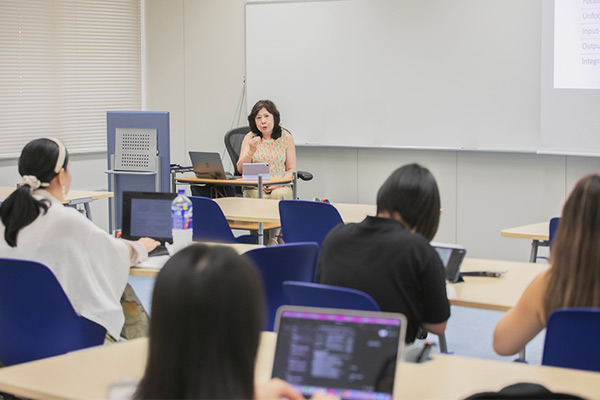
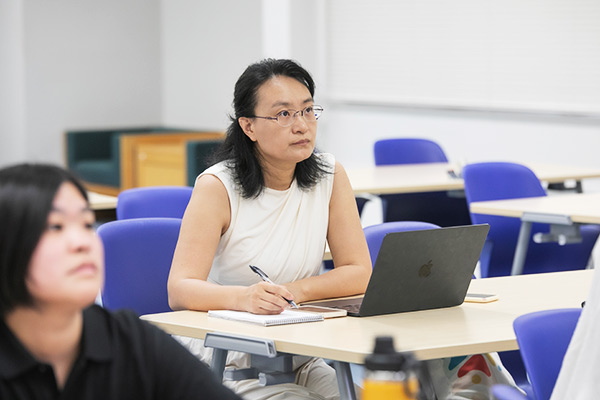
本プログラムは、言語教育の理論と実践の両面から教授法を学び、言語教育における専門性の向上を高めることを目的としています。今年度のForeign Language Pedagogyコースには、日本をはじめ国内外から11名が参加し、対面およびZoomを活用したハイブリッド形式で受講しました。
今年度もコロンビア大学のHan教授を講師にお迎えし、第二言語教育における最新の研究や理論について学ぶとともに、生成AIを言語教育に取り入れる重要性や、教育ツールとして効果的に活用する方法についてご指導いただきました。
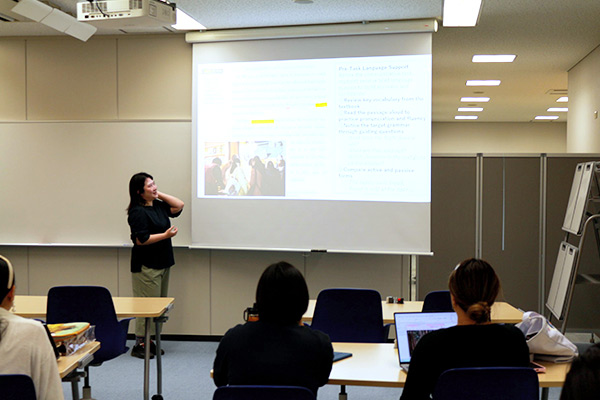
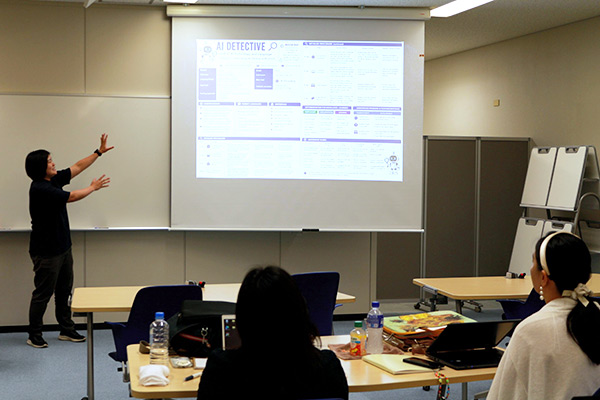
プログラム初日には、グループディスカッションを通して、生成AIと第二言語教育の可能性について理解を深めました。期間中には、理論と実践を結び付けることを目的に、生成AIを取り入れた授業計画の作成・発表に取り組みました。発表後には、参加者同士でフィードバックを行い、Han教授から直接ご指導をいただき、第二言語教授法への理解をさらに深めました。このプログラムを通して、参加者は第二言語教育における理論と実践への理解を深めるとともに、生成AIを教育に効果的に取り入れるための知見を深める学びの機会となりました。
最終日にはプログラムを修了した参加者の皆さんの成果を称え、プログラムを締めくくりました。
最後に、本プログラムの受講生からのコメントを一部ご紹介します。
「私は現在、日本で英語教員として勤務しています。これまでは文法中心の授業を行なっていましたが、本プログラムを通して、文法を教えるだけでは言語の習得を促すのに十分ではないと学びました。授業内で意味のあるインプット(meaningful input)を取り入れ、実際の場面を想定したアウトプットの機会を提供する授業を展開することで、学習者のコミュニケーション能力の向上を促すことが可能だと学びました。また、学習者にはそれぞれ異なる言語習得の段階があるため、一人ひとりの学びに合わせた学習環境を整える重要性についても理解を深めることができました。」
「このプログラムでは、英語を教えている教員だけでなく、英語以外の言語を教えている教員や異なる職種の参加者と出会えて、多様な視点から意見交換ができたことがとても良い経験となりました。また、期間中にそれぞれが模擬授業の計画を作成して発表し、参加者同士でフィードバックをし合えたことが私の中で一番印象的なポイントです。」
改めまして、2026年度のプログラム受講生の皆様、プログラム修了おめでとうございます!
*TESOL(Teaching English to Speakers of Other Languages)は、英語を母国語としない人に英語を教えるための教授法を指します。

Program Report: TCSOL/TESOL Dual Certificate Summer Program in Osaka, Japan 2026
The final week of the 2026 TCSOL/TESOL Dual Certificate Summer Program was held at our university from July 20th to July 24th in collaboration with The Center for International Foreign Language Teacher Education (CIFLTE) at Teachers College, Columbia University.
The program is designed for educators and professionals who want to enhance their expertise in language education by exploring both theoretical and practical aspects of language instruction. This year, the Foreign Language Pedagogy course had 11 participants from Japan and around the world, who attended either in-person or synchronously through Zoom.
For this summer's offering, Professor ZhaoHong Han of Teachers College, Columbia University emphasized the importance of AI integration and how it could be effectively utilized as a tool for language instruction.
To start the week, participants engaged in group discussions about the potential applications of generative AI in second language education. As the week progressed, participants were tasked with designing a lesson plan that connected theory and practice while also incorporating generative AI. These presentations gave participants the opportunity to not only check their understanding of effective language instruction, but also build on their understanding through peer feedback in addition to in-depth feedback from Professor Han. This intensive week of instruction cultivated an understanding of theoretical knowledge, teaching practices, and the integration of AI in second language teaching.
We wrapped up the program with a special celebration of the achievements of this year's dedicated participants. Congratulations to the Class of 2026 on their great accomplishments!
Below are some reflections shared by this year's participants:
"So, I am currently a teacher in Japan, and before this course, I used to teach in a very grammar-based way. Through these sessions, I learned that just teaching grammar isn't enough for students to acquire a language. We also have to create an environment where students can engage in meaningful input and output and provide ways and opportunities for them to communicate in real-world settings.
I also learned that students have their own developmental stages, so we as teachers can't really say, "Oh, you're going to learn this grammar today." Instead, we have to adapt and create an environment that's best for their learning."
"Actually, this is the first program I've ever participated in, so I can't really compare it with other programs. But what was really interesting for me was that I was able to meet participants from different backgrounds. Their first languages are different, and the learners they teach are different as well.
It was really interesting for me to exchange ideas and talk about our lesson plans. I also liked how we were able to give presentations throughout the sessions and give feedback to each other.
So, I can't really compare it with other programs, but I really liked that part."